

Quick answer
Snorkeling in Hawaii in November delivers excellent conditions across most islands, with water temperatures between 77-79°F and visibility often exceeding 60 feet. The month falls just before the peak winter swell season, meaning calmer seas prevail at protected bays and leeward coasts. Rain showers tend to be brief and localized, rarely disrupting morning snorkel sessions. South and west-facing shores offer the most consistent conditions as northern coasts begin to see larger swells.
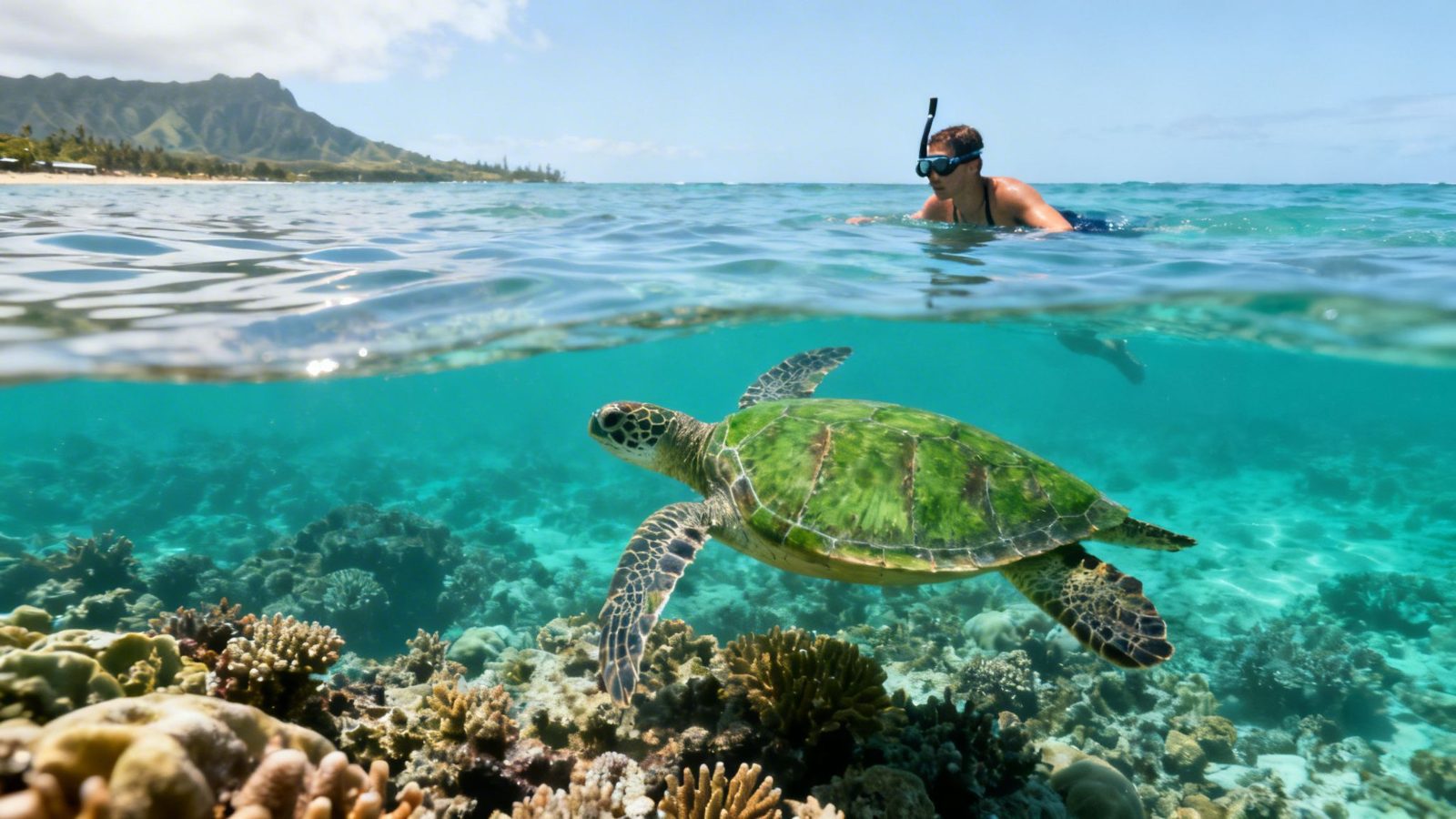
November marks the intersection of Hawaii's seasonal transitions, a window when the Pacific trades soften and ocean conditions stabilize before the full arrival of winter storms. Water clarity reaches annual highs as summer runoff subsides and before winter rains deliver heavier sediment loads. The archipelago's leeward shores—protected from prevailing northeast winds—offer the most reliable access, with Hanauma Bay on Oahu, Molokini Crater off Maui, and Kealakekua Bay on the Big Island maintaining glassy morning surfaces. Marine life encounters intensify as humpback whales begin their migration from Alaska, with early arrivals appearing in shallow channels by mid-month. Green sea turtles frequent cleaning stations at every major reef system, and endemic species like the humuhumunukunukuapua'a triggerfish remain active in warmer lagoons. Manta ray night dives along the Kona Coast see consistent sightings as plankton blooms attract the gentle giants to feeding zones illuminated by dive operators. November snorkeling in Hawaii requires strategic site selection as northern exposures begin showing the season's first significant swells. South Shore beaches on Maui and the protected bays of Oahu's southeastern coast deliver the calmest entry points, with visibility routinely clearing 80 feet on windless mornings. Rain showers arrive more frequently than summer months but typically pass within 20 minutes, leaving behind refracted light that penetrates the water column in shimmering columns. Water temperature hovers near 78°F, warm enough for extended swims in a shorty wetsuit or rash guard. The conservation fee at Hanauma Bay remains the state's most structured snorkel access point, with Wednesday through Sunday windows opening before dawn to capture peak clarity. Molokini Crater tours depart Maalaea Harbor daily, reaching the crescent-shaped caldera as the sun breaks the horizon. Independent snorkelers find equally rewarding conditions at no-fee sites like Honolua Bay on Maui's northwest corner and Kahaluu Beach Park on the Big Island, where reef fish populations thrive in shallow, protected waters that remain accessible even as offshore swells build.
“November water clarity reaches annual highs as summer runoff subsides and before winter rains deliver heavier sediment loads.”
Understanding Snorkeling in Hawaii in November Weather Patterns
November marks the transition into winter, bringing increased north shore swells that shift snorkeling focus toward the protected south and west coasts. Early November remains a favorable period before the winter surf season fully intensifies.
Early November
ModerateWarm water, 78-80°F, north swells starting
Late November
High (holidays)Variable, 76-78°F, north shore surf rising
Weekday mornings
Low—, calmest water conditions for visibility.
Verdict: The best time for snorkeling in November is during the first two weeks of the month, specifically on weekday mornings, to take advantage of calmer waters before winter surf patterns dominate.
Official Opening Hours for Snorkeling in Hawaii in November
Hanauma Bay Nature Preserve operates on a set weekly schedule for visitors. The preserve remains closed to the public on Mondays and Tuesdays.
| Monday | Closed | |
|---|---|---|
| Tuesday | Closed | |
| Wednesday | 06:45–16:00 | |
| Thursday | 06:45–16:00 | |
| Friday | 06:45–16:00 | |
| Saturday | 06:45–16:00 | |
| Sunday | 06:45–16:00 |
Entrance Fees for Snorkeling in Hawaii in November
Entrance fees for Hanauma Bay Nature Preserve are structured as a conservation fee per person. This fee applies to all visitors regardless of the time of year.
A typical adult pays 25 USD for admission, which is the standard conservation fee required for all visitors.
Getting to Snorkeling Spots in Hawaii in November
Hanauma Bay Nature Preserve is located on the southeast coast of Oahu. The most direct approach for visitors is via car, though public bus services also provide access to the area.
Kalanianaʻole Highway to Hanauma Bay Nature Preserve
TheBus Route 22 or 23 to Hanauma Bay
Kalanianaʻole Highway to Hanauma Bay Nature Preserve
Step-by-Step Guide to Snorkeling in Hawaii in November
A successful snorkeling visit in November requires advance preparation and early arrival. The entire process from parking to entering the water takes approximately 45 minutes.
Reserve your entry online
Book your visit slot through the official Hanauma Bay reservation system at least 48 hours in advance. Spots fill quickly in November, so secure your preferred date early in your trip planning.
Arrive during the opening window
Reach the preserve when gates open to claim parking before the lot reaches capacity. Late arrivals often face turned-away disappointment or hour-long waits for departing vehicles.
Watch the mandatory education video
All first-time visitors must view the nine-minute marine conservation film before beach access. Repeat visitors within the same calendar year can skip this requirement by showing proof.
Pay the conservation fee on-site
The fee station accepts cards and cash; keep your receipt as staff check it at multiple points. Children 12 and under enter without charge but still need reservation confirmation.
Descend the paved path to the bay
The 10-minute walk down is steep; many visitors underestimate the return climb in wet gear and full sun. Tram service operates for those who need assistance, though lines form quickly.
Enter from the sandy beach area
Wade in gradually from the main beach to acclimate to water temperature, which averages 77°F in November. Avoid the rocky ledges on either side where currents strengthen and footing becomes unstable.
Essential Tips for Snorkeling in Hawaii in November
Navigating Hawaii waters in November requires awareness of seasonal reef-safe regulations and local wildlife protection protocols.
Reef-Safe Sunscreen
Hawaii law mandates the use of non-nano mineral sunscreens containing zinc oxide or titanium dioxide. Products containing oxybenzone and octinoxate are prohibited to prevent coral bleaching.
Underwater Visibility
November brings shifting weather patterns that can stir up sediment in shallow bays. Plan your water activities for the early morning before prevailing trade winds increase surface chop.
Protecting Marine Life
State law prohibits touching, feeding, or chasing sea turtles and Hawaiian monk seals. Maintain a distance of at least 10 feet from turtles and 50 feet from seals to avoid fines and habitat disturbance.
Managing Sun Exposure
UV levels remain high in November despite cooler air temperatures. Wear a long-sleeved rash guard to minimize skin exposure without relying solely on chemical sunscreens.
Current Awareness
Winter swells occasionally arrive in November, impacting water clarity and safety on north-facing shores. Check local surf reports and prioritize snorkeling in sheltered south or west-facing bays.
Check availability
Frequently asked questions about snorkeling in Hawaii in November
Everything you need to know about snorkeling in hawaii in november