

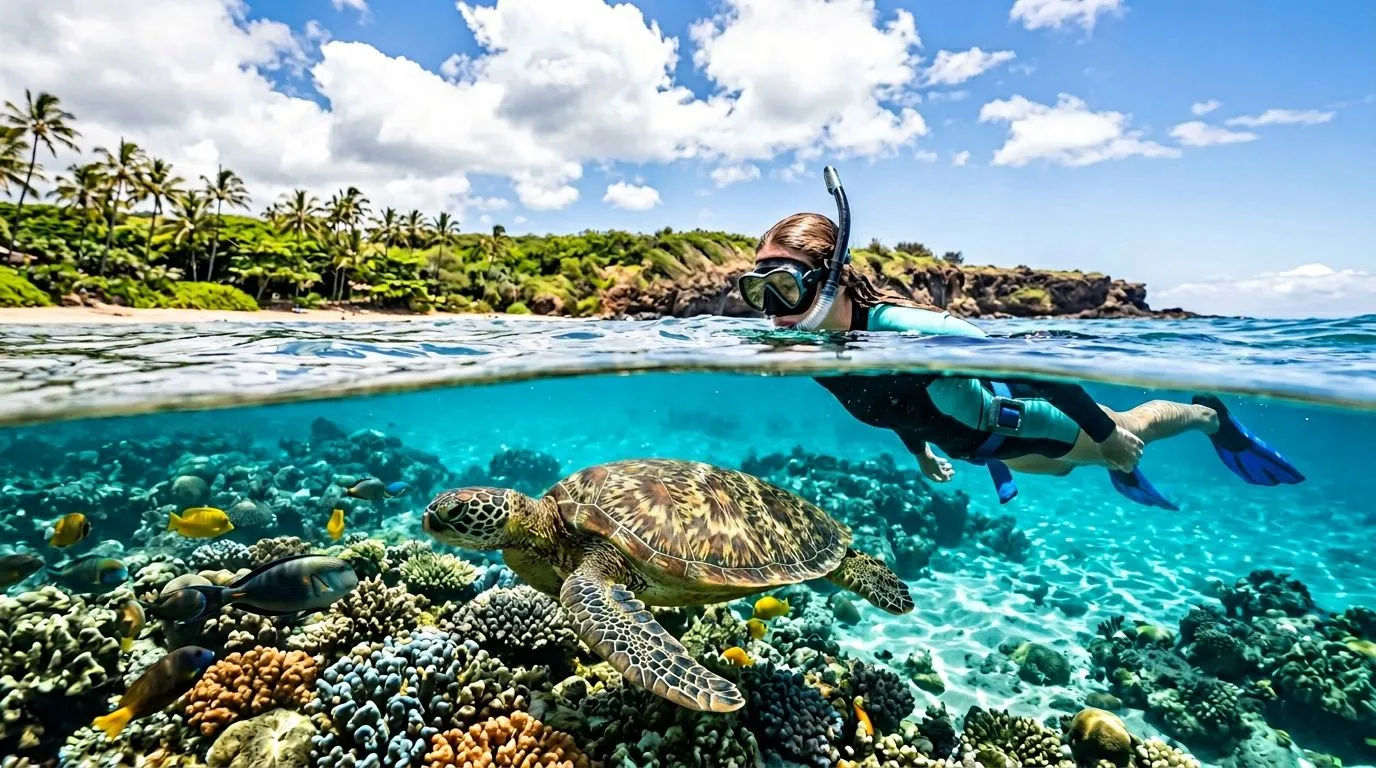
Quick answer
Snorkeling in Hawaii with turtles is best at Laniakea Beach on Oahu's North Shore, open 24 hours daily with free access. Arrive between 7:00 and 10:00 AM for calmer water and fewer crowds. Green sea turtles feed on algae-covered rocks in the shallows, typically within 10 to 30 feet of shore, making them accessible to snorkelers of all skill levels.
Hawaii's green sea turtles, or honu, are present year-round at North Shore feeding grounds where algae blooms sustain resident populations. Laniakea Beach earned its nickname "Turtle Beach" because honu surface predictably in the nearshore zone, resting on the sandy bottom between feeding cycles. The beach sits on public land managed by the State of Hawaii Department of Land and Natural Resources, with no entrance fee or reservation requirement. Morning sessions offer the clearest water visibility before afternoon trade winds stir sediment and increase surface chop. Turtles are most active during morning feeding periods, grazing on limu (seaweed) that clings to submerged lava rock. The North Shore's basalt reef structure creates natural channels where currents concentrate algae growth, drawing honu to specific zones that snorkelers can target. Water depth ranges from waist-deep to overhead within 50 feet of shore, allowing surface observation without advanced swimming skills. Federal law protects green sea turtles under the Endangered Species Act, prohibiting touch, pursuit, or harassment. The mandated distance is 10 feet in water, enforced by state conservation officers who patrol high-traffic beaches. Turtles that approach swimmers voluntarily do not create a violation, but snorkelers must retreat if the animal changes direction or shows avoidance behavior. Fins prevent accidental reef contact, which damages both coral substrate and the algae honu depend on. Biodegradable sunscreen is recommended to minimize chemical runoff into feeding areas. Turtle presence fluctuates with tide cycles and swell direction. Low tide exposes more reef surface, concentrating turtles in deeper pockets. High surf from winter North Pacific storms reduces visibility and creates hazardous shore break, making snorkeling inadvisable from November through February. Spring and summer offer the most consistent conditions, though turtles remain accessible during calm winter windows. The beach has no facilities beyond a small parking area, so visitors bring their own snorkel gear, water, and sun protection.
“Green sea turtles surface predictably in the nearshore zone at Laniakea Beach, resting on the sandy bottom between feeding cycles.”
Best Time for Snorkeling in Hawaii with Turtles
The best arrival window for snorkeling with turtles is 07:00–10:00. Arriving during these hours ensures calmer water conditions for visibility and reduces crowd interference with the marine life.
Summer months
Heavy traffic and crowdsClear water, 80°F to 85°F. Warmer temperatures provide comfortable water for longer snorkeling sessions.
Winter months
Moderate crowdsRougher surf, 75°F to 78°F. Higher waves often reduce visibility and limit access to shallow water areas.
Weekday mornings
Low to moderate crowds—
Visiting on weekdays before 10:00 minimizes human presence, which is beneficial for observing turtles in their natural habitat.
Verdict: The best time to visit is weekday mornings between 07:00–10:00 during the months of April, May, September, or October.
Opening Hours for Snorkeling in Hawaii with Turtles Locations
Public beach locations used for snorkeling with turtles, such as Laniakea Beach, provide 24-hour access to the shoreline.
| Monday | 00:00–23:59 | |
|---|---|---|
| Tuesday | 00:00–23:59 | |
| Wednesday | 00:00–23:59 | |
| Thursday | 00:00–23:59 | |
| Friday | 00:00–23:59 | |
| Saturday | 00:00–23:59 | |
| Sunday | 00:00–23:59 |
Getting There for Snorkeling in Hawaii with Turtles
Laniakea Beach is located on the North Shore of Oahu, Hawaii, USA. Reaching the site is most efficiently accomplished by car via Kamehameha Highway.
Kamehameha Highway (Hwy 83) heading North
Route 60 (TheBus) to Kamehameha Hwy/Laniakea Beach
Etiquette for Snorkeling in Hawaii with Turtles
Hawaiian green sea turtles (honu) are protected under federal and state law. Maintaining proper distance and reef-safe practices ensures both wildlife protection and your safety.
Do
- Stay at least 10 feet away from turtles at all times
- Use reef-safe sunscreen without oxybenzone or octinoxate
- Float calmly and let turtles approach on their terms
- Report injured or entangled turtles to authorities immediately
- Observe from a respectful distance without blocking their path
- Avoid touching or standing on coral formations
Don't
- Touch, chase, or attempt to ride sea turtles
- Surround or corner turtles while they surface for air
- Feed turtles or alter their natural behavior
- Wear chemical sunscreen that damages coral reefs
- Stand on or grab coral to steady yourself
- Use flash photography that may startle marine life
Checklist for Snorkeling in Hawaii with Turtles
Pack light but cover the essentials for safe, comfortable turtle encounters at Laniakea Beach.
-
Bring reef-safe sunscreen — Chemical sunscreens harm coral reefs and are banned in Hawaii.
-
Pack your own snorkel mask and fins — Rental shops may not open early, and a proper fit prevents leaks.
-
Carry a waterproof phone case — Protects your device and lets you capture photos from the water.
-
Bring a beach towel and water bottle — Public beaches have limited facilities, so bring hydration and drying gear.
-
Wear a rash guard or swim shirt — Reduces sunscreen needs and protects against UV rays during extended snorkeling.
-
Pack a small dry bag — Keeps valuables like keys and ID safe while you're in the water.
Check availability
Common Questions: Snorkeling in Hawaii with Turtles
Everything you need to know about snorkeling in hawaii with turtles